
Menu
Schenectady Patio Care: 10 Essential Tips for Stamped Concrete
Stamped Concrete Patio Schenectady
Taking good care of your stamped concrete patio will help to extend its lifespan and maintain the beauty of a great outdoor space for you to enjoy. The area around Schenectady is known for extreme temperatures with fluctuating temperatures and changing weather conditions, which can cause problems on decorative concrete surfaces. If you have a property close to the historic Union College campus in Schenectady, you are also at risk for freeze/thaw damage as well. Proper maintenance techniques will help you protect your investment while keeping the visual appeal that has made stamped concrete such a popular choice. Regular professional maintenance of your outdoor spaces for entertaining will keep them both safe and functional throughout each season.
1. Regular Cleaning and Debris Removal
Weekly sweeping is important in maintaining the cleanliness of your stamped concrete patio surface, as allowing debris to build up will result in the formation of stains and/or damage to your decorative finish. Sweep regularly with a soft-bristle brush or with a leaf blower to remove leaves, twigs, dirt, etc., that are collected in the pattern grooves of your stamped concrete. Failure to do so will allow for debris to be retained on the surface of your stamped concrete, resulting in the creation of moisture that will result in the formation of stains and the degradation of the sealer applied to your decorative concrete surface.
On a monthly basis, rinse your stamped concrete patio with a garden hose to remove the embedded dirt and prevent the accumulation of contaminants. Properties located near the rose gardens at Central Park experience an increase in the amount of organic debris that accumulates on their stamped concrete surfaces and, therefore, may need to clean their stamped concrete more frequently during the fall months. The prompt removal of leaves and plant material will prevent tannin stains that are very difficult to eliminate over time.
2. Do Not Use High-Pressure Washing Equipment
Never use high-pressure washing equipment on your stamped concrete patio surface, as the high-pressure stream of water will strip away the protective sealer and damage the decorative finish. Each time you use high-pressure washing equipment, you are removing thin layers of protective coating from the surface of your stamped concrete, ultimately exposing the underlying concrete to the elements and potential weather damage. Rinsing your stamped concrete patio surface gently with a garden hose (standard water pressure) will be sufficient for routine cleaning.
If you feel you need to perform a deeper cleaning of your stamped concrete patio, please consult a professional contractor who understands how to properly clean your decorative concrete surface and what level of pressure is safe for your specific application. Homeowners located in the Stockade District have found that using aggressive cleaning methods to clean their decorative concrete surfaces has caused them to incur costly restoration work to repair damage that was incurred as a result of improper maintenance procedures.
3. Use Only pH Neutral Cleaners Specifically Designed for Decorative Concrete Surfaces
Always use pH-neutral cleaners specifically designed for decorative concrete surfaces. Do not use acidic products such as vinegar, harsh household cleaners, or muriatic acid on your stamped concrete patio surface, as these products will damage the sealer and potentially etch the surface of the concrete. These types of cleaning products can also whiten, thin, and ultimately fail the protective coating applied to your decorative concrete surface.
Also, avoid using plant fertilizers that include ammonium nitrates or sulfates, as these products will directly attack the concrete and create permanent stains. Properties located along the Mohawk-Hudson Bike-Hike Trail often experience fertilizer run-off from nearby landscaping and, therefore, need to take extra precautions to manage chemical exposure to decorative concrete surfaces.
4. Proper Winter Snow and Ice Management
When removing snow from your stamped concrete patio surface, always use a plastic shovel or a snow blower with rubber-edged blades to avoid scratching the decorative surface. Never use metal-edged tools to remove snow, as this will scratch and gouge your stamped concrete patio surface, creating permanent damage that will detract from its overall aesthetic appeal. When removing snow from your decorative concrete surface, it is best to do so gently to preserve both the definition of the pattern and the integrity of the protective sealer.
Never Apply Chemical Melting Agents to Your Decorative Concrete Patio Surface
Salt-based deicing products contain chlorides that penetrate the sealer and attack the concrete, causing scaling, spalling, and eventual surface deterioration. Therefore, never apply chemical melting agents to your decorative concrete patio surface, especially during the first year after installation. Properties located near the Municipal Golf Course area utilize sand or kitty litter for winter traction without damaging the decorative surface.
Alternative Safe Winter Solutions
Utilize sand, ash, or non-clumping kitty litter for traction on slippery surfaces without chemical damage. These alternative solutions provide the same level of safety and protection from chemical damage to your decorative concrete patio surface. However, remove traction materials promptly once temperatures rise to prevent abrasive action that will wear away the decorative finish of your stamped concrete patio surface.
5. Sealer Maintenance and Reapplication
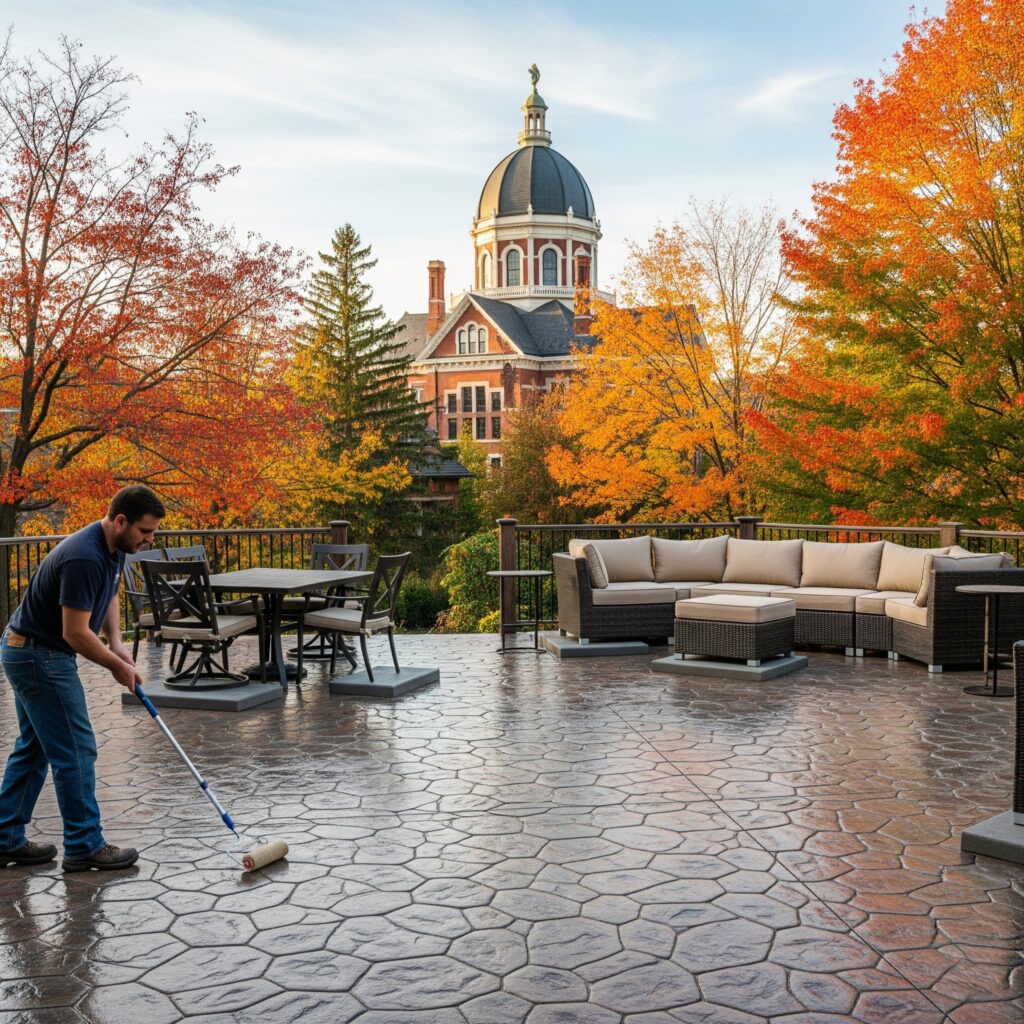
Every 2-3 years, reapply quality sealers to your stamped concrete patio surface to continue to provide moisture, UV ray, and surface wear protection. Sealers not only help to protect your decorative concrete patio surface but also enhance the color vibrancy and extend the surface life of your decorative concrete surface. By applying sealers at the right time, you will be able to extend the lifespan of your decorative concrete surface.
To determine if your sealer needs to be reapplied, inspect your decorative concrete surface annually and reapply the sealer once your decorative concrete surface shows signs of wear, usually indicated by a decrease in sheen or color fading. Due to the high volume of pedestrian traffic, properties located near Proctor’s Theater will typically require more frequent sealer applications to achieve and maintain the desired level of protection and appearance.
6. Preventing Moisture Accumulation
Keep furniture, planters, and decorative items at least 1/4 inch above the stamped concrete patio surface to allow for adequate airflow. Contact between objects and the decorative surface of your stamped concrete patio creates a perfect environment for moisture to accumulate and damage the sealer and potentially cause staining. Adequate airflow prevents moisture buildup that causes white spots and sealer failure.
Redirect sprinkler systems and downspouts away from decorative concrete surfaces to limit repeated exposure to water. Prolonged exposure to water reduces the longevity of sealers and creates conditions conducive to efflorescence, scaling, and other forms of moisture damage commonly seen in the Capital Region.
7. Prompt Treatment of Stains
Cleaning spills immediately will prevent long-term stains on your stamped concrete patio surface. Grease from food, automotive fluid, beverages, etc., penetrates the sealer when left unattended and create difficult to remove stains. Cleaning spills quickly with warm water and mild soap will generally prevent most staining issues from becoming a long-term problem.
For stubborn stains, use an alkaline degreaser specifically formulated for decorative concrete surfaces and follow the manufacturer’s directions. Homeowners near the GE Realty Plot area often find themselves needing to remove automobile stains that require specialized cleaning products designed specifically for decorative concrete maintenance.
8. Protection from UV Rays
Using umbrellas, pergolas, or temporary shade structures to cover your stamped concrete patio during peak summer months will help to reduce exposure to UV rays that fade colors and degrade sealers too early. Strategically placed shade will extend the period of time required to reapply sealers.
Consider using UV-resistant sealers on south-facing patio surfaces that are exposed to full sun for extended periods of time. Properties located near Jackson’s Garden experience extended periods of direct sunlight and, therefore, may benefit from additional UV protection for their decorative concrete patio surfaces.
9. Heavy Load Handling
Do not place excessively heavy objects on your stamped concrete patio surface, especially near edges where cracking potential increases. Use protective pads under the feet of furniture and heavy equipment to distribute the weight evenly across the surface of your decorative concrete patio. Placing excessive concentrated loads on your decorative concrete patio surface can cause it to crack and compromise the structural integrity of your decorative concrete surface over time.
Be cautious when driving vehicles on your stamped concrete patio surface, and keep heavy equipment away from edges and pattern joints. Emergency vehicles and delivery trucks should enter properties through designated driveways rather than crossing decorative concrete surfaces whenever possible.
10. Seasonal Inspections and Maintenance
Perform a complete assessment of your decorative concrete patio surface each spring to identify potential winter damage and develop a plan for any necessary repairs or maintenance activities. Identify new cracks, sealer wear patterns, staining, or surface deterioration that requires professional attention to prevent minor issues from evolving into costly repair projects.
Schedule annual maintenance consultations with a qualified contractor who understands the specific needs of decorative concrete care. Properties located in neighborhoods surrounding Villa Italia benefit from having a professional evaluate their decorative concrete surfaces to identify any potential problems prior to them compromising the durability or appearance of their decorative concrete surfaces.
Decorative Concrete Maintenance Programs
Consider enrolling in a professional decorative concrete maintenance program that provides ongoing cleaning, sealing, and inspection services. Ongoing maintenance will provide consistent care and protect your decorative concrete patio surface through all of the seasonal challenges it faces. In many cases, the costs associated with ongoing maintenance are less than those associated with repairing damage after it occurs.
About Schenectady Concrete Works
Schenectady Concrete Works specializes in decorative concrete patio maintenance and expert restoration services throughout the greater Capital Region. Our knowledgeable staff offers comprehensive decorative concrete care programs that will preserve the beauty and performance of your decorative concrete surface for years to come.