Menu
Schenectady Foundation Issues: Cracks, Bowing Walls & More
Concrete Foundation Repair Schenectady
Schenectady area home owners are faced with a wide variety of foundation problems caused by unique geology, extreme cold weather, and the type of soil found in Upstate New York. Freezing and thawing cycles, as well as hydrostatic pressure, can put a great deal of strain on concrete foundations when they are pushed past their design limitations. In addition, properties located in the Stockade area often have a higher incidence of settlement due to disturbed fill soils and/or proximity to the fluctuation in the Mohawk River’s water table. Identifying potential problems early will prevent the small issues that you may initially see from turning into larger structural issues that require significant repair to the foundation system itself. A professional assessment will allow you to identify the cause of your problem, provide you with a solution that addresses the issue, and the underlying soil conditions that led to the problem in the first place.
Common Foundation Problems in the Schenectady Area
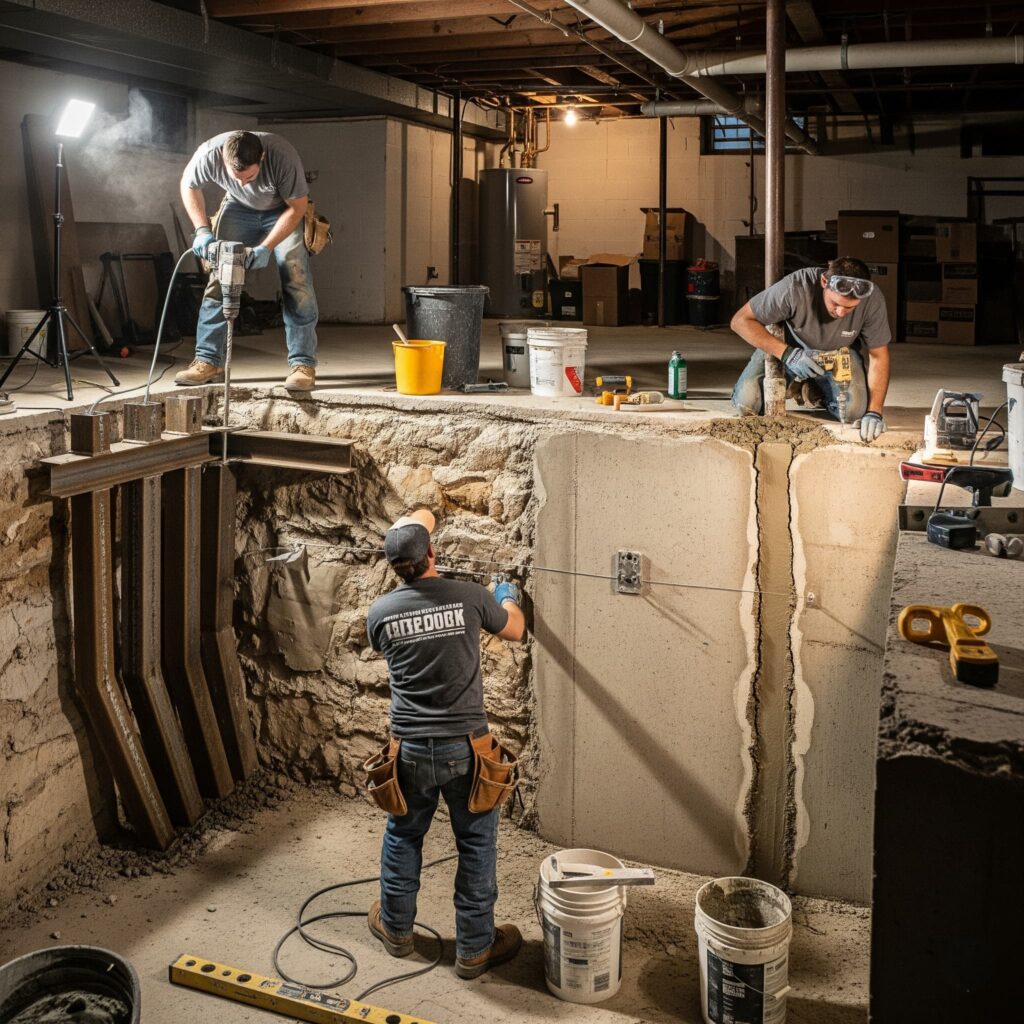
Many times, concrete foundation repair problems become apparent through visible cracks in basement walls that appear horizontally, vertically, or as stair-step cracks. Doors and windows will begin to stick, floors will begin to slope, and walls will begin to pull away from the foundation as a result of foundation settlement. The Schenectady area has experienced many years of construction activity, which created poorly compacted fill soils in the surrounding area.
Bowed basement walls signify severe structural issues related to excess soil pressure against foundation walls. Water expands clay soils, creating hydrostatic pressure against concrete structures. Winter freeze-thaw cycles exacerbate this condition, causing further expansion and contraction in an already compromised foundation.
Common Soil-Related Foundation Issues
In the Schenectady area, there are layers of clay, sand, and disturbed soils, each reacting differently to moisture changes. Clay soils absorb large amounts of water during wet periods, thus expanding and applying pressure to foundation walls. Sandy soils drain faster, but can erode quickly during heavy rainfall events, leaving voids beneath concrete slabs.
Homes built in the higher elevation area of Central Park tend to have better drainage, while homes built in the lower-lying areas adjacent to the Mohawk River experience continued moisture problems. An understanding of these soil types will assist in choosing the best course of action for repairing concrete foundation problems in various neighborhoods throughout Schenectady.
Identifying Foundation Warning Signs
Widened cracks in basement walls (wider than 1/4″) indicate structural movement requiring immediate evaluation by a trained professional. Lateral pressure from either soil or water creates horizontal cracks that pose a greater risk than vertical cracks. Widespread cracking throughout the basement walls, floors, or throughout the entire house signifies the presence of extensive foundation problems.
Warning signs inside the house include: uneven floors, doors that cannot close, and cracks forming around windows and door frames. These warning signs are commonly seen in homes located near Proctor’s Theater and the downtown area, resulting from traffic vibration and the age of the infrastructure affecting soil stability around foundations.
Moisture-Related Foundation Deterioration
Water leaking through foundation cracks represents both current moisture problems and possible weakening of structural components. White mineral deposits (efflorescence) on concrete walls represent continuous water movement through the foundation materials. Ongoing dampness or repeated flooding necessitates comprehensive waterproofing solutions in addition to structural repairs.
Poorly drained areas around homes allow water to build up against foundation walls, generating hydrostatic pressure and accelerating the deterioration process. Homes located in the GE Realty Plot area often require improved drainage systems to control surface water and protect foundation investments.
Repair Solutions for Damaged Concrete Foundations
Sealing small structural cracks using epoxy injection can cost anywhere from $250 to $800 per crack and seals small cracks to stop the flow of water while providing some degree of structural integrity back to damaged areas. Ultimately, however, the damaged area(s) must still be repaired.
Using steel or carbon fiber reinforcement strips to stabilize bowed basement walls can range in price from $4,000 to $12,000 for a complete system. A bow wall stabilization system will slow down any further movement of the bowing wall and can slowly straighten the wall over time. The system must be installed correctly by a trained professional so that it operates efficiently and effectively.
Foundation Underpinning and Support Systems
Installing push piers will provide permanent support for the foundation by transferring structural loads to a stable layer of soil or rock below. Typically, individual push piers cost anywhere from $1,000 to $3,000 each, and most homes require several piers to provide sufficient support for the entire home. Push piers are effective for homes experiencing foundation settlement throughout the Capital Region.
Installing helical piers is advantageous in regions where soil conditions vary greatly. Helical piers can cost anywhere from $1,200 to $3,500 each and, because they function similarly to screws, can be adjusted during the installation process to optimize the amount of load-bearing capacity. They are also effective in homes located in the Jackson’s Garden area.
Interior Basement Waterproofing and Drainage
Comprehensive interior waterproofing systems, including installing a drain tile system and a sump pump, can cost anywhere from $2,000 to $7,000. These systems collect and transport water away from the foundation walls, thereby keeping the basement free of standing water. When properly installed, a comprehensive interior waterproofing system will keep the basement dry for years to come.
Installing exterior waterproofing systems requires digging around the entire perimeter of the home’s foundation and can cost anywhere from $10,000 to $25,000. Exterior waterproofing is effective in treating water problems at the point of origin, but it does require significant disturbance to landscaping and access areas around the home.
Surface Water Drainage Systems
Installing French drains to manage surface water around the home’s foundation can cost anywhere from $8 to $15 per linear foot. These systems are especially effective in managing surface water for homes located in the area of the Municipal Golf Course, as the natural drainage pattern directs water towards homes.
Extending downspouts and improving surface grading can cost anywhere from $500 to $2,000, but they are very cost-effective in preventing water from accumulating against the home’s foundation walls. In fact, simple drainage improvement techniques can eliminate the need for more costly structural repairs.
Floor Stabilization and Concrete Slab Repair
Rehabilitating sagging floors using adjustable steel posts can cost anywhere from $500 to $1,500 per post, depending upon how much support is needed. Depending upon the extent of the compromise to the floor system, multiple posts may be required to support the floor. Adjustable steel posts are effective for rehabilitating older homes with basement foundations that have undergone settlement or have had beams deteriorate.
Leveling a sunken section of a concrete slab using polyurethane foam injection can cost anywhere from $3 to $6 per square foot, depending upon the extent of the sunken area. Polyurethane foam injection is a non-invasive and effective method of supporting sunken sections of concrete slabs.
Factors That Influence Cost and Budget Considerations
The cost associated with repairing a foundation varies significantly depending on the extent of the damage, the type of repair used, and the accessibility to the damaged area. For example, repairing minor cracks in the foundation using epoxy injection can cost anywhere from $500 to $2,000, whereas repairing major structural damage using a variety of methods can cost anywhere from $15,000 to $30,000 or more. Generally speaking, early intervention will result in lower overall costs.
A structural engineer’s assessment can cost anywhere from $300 to $1,000 and is crucial for identifying the cause of the problem and selecting the best course of action for repairing the damaged area. Assessments by engineers will help homeowners establish priorities for repairing damaged areas and ensure that the final repairs meet all applicable building codes.
Insurance and Financing Options
Most homeowner insurance policies do not cover foundation repairs unless the damage was caused by an unexpected event, such as a burst pipe. Homeowners will generally pay out of pocket for foundation repairs related to gradual settlement, soil movement, etc. Many contractors offer financing options for larger concrete foundation repair projects.
Homeowner’s property value declines dramatically when the foundation is left unrepaired; therefore, repairing the foundation sooner rather than later is a good financial decision. Often, the cost of repairing the foundation will be recovered through an increase in property value, especially if the home is located in a highly sought-after neighborhood such as the Villa Italia area.
How to Prevent Future Foundation Problems
Performing regular maintenance on your home, including cleaning gutters, grading land properly, and promptly sealing small cracks in your foundation, can help prevent minor issues from becoming major problems. Regular inspections by a knowledgeable professional will help you identify developing issues prior to them becoming more severe and requiring more costly concrete foundation repairs.
Proper management of landscaping around your home’s foundation will prevent damage to roots and maintain proper drainage patterns. Trees planted too close to the home’s foundation can create unstable soil and should be monitored to see if they have any adverse effects on the structural integrity of the home.
Choosing the Right Foundation Contractor
Knowledgeable and reputable foundation contractors will perform a thorough evaluation of your home, develop a comprehensive repair plan, and provide a warranty for the completed repairs. Contractors who specialize in foundation repair in your area are familiar with the local soil conditions and climate conditions that affect foundations in the Capital Region. Getting quotes from multiple contractors will help you find the right repair approach and the most competitive pricing for your project.
When evaluating contractors, look for qualifications such as licenses, insurance, and Better Business Bureau ratings. Ask for references to recent projects in the Capital Region and evaluate their ability to communicate with you throughout the repair process.
Schenectady Concrete Works is a full-service foundation repair company specializing in concrete foundation repair and structural stabilization services for residents of the greater Capital Region. With our team of experienced professionals, we are equipped to handle all of your concrete foundation repair needs.