Menu
When to Resurface Concrete in Schenectady: Signs It’s Time
Concrete Resurfacing Schenectady
Protecting a home’s investment through timely concrete resurfacing is important to avoid having to replace it completely in the future. Concrete in Schenectady deteriorates faster than elsewhere due to the harsh winter conditions, freeze/thaw cycle, and the fluctuation of temperatures associated with this region. Therefore, properties located in the historic Stockade District are especially advantageous when resurfaced prior to further deterioration, thereby preserving both functionally and aesthetically. Timely identification of early warning signs will help homeowners plan their maintenance and budgets. A professional assessment of the surface condition will ensure the most cost-effective and longest-lasting method of treating the concrete surface.
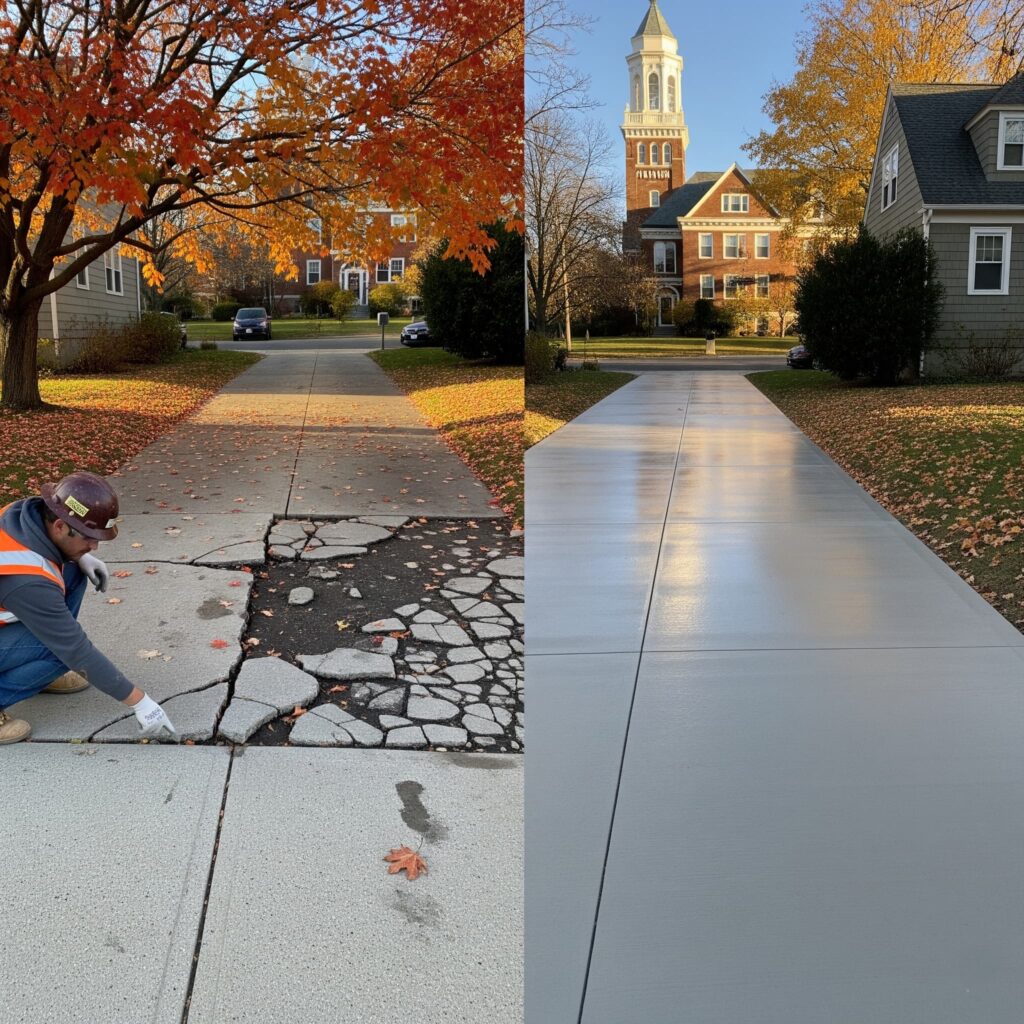
Age-Related Concrete Deterioration Signs
The concrete deterioration pattern most commonly associated with aging is a gradual loss in surface texture and appearance; however, the process of deterioration is accelerated in upstate New York’s climate. Freeze-thaw cycles repeatedly damage the concrete, causing stress internally and damage externally. The heavy foot traffic of the college campus and use of deicing chemicals in the winter months contribute to a faster rate of deterioration than average. It is essential to conduct regular evaluations of the concrete to determine the deterioration pattern prior to compromising the structure of the concrete or requiring total removal.
Surface Wear and Texture Loss
Surface wear and texture loss are indicated by smooth, worn-down areas where the concrete has lost its protective texture and aggregate has been exposed. Smoothed down areas become slippery when wet and will stain more easily than textured surfaces. Loss of the original broom finish or decorative finishes indicates that the protective layers of the surface have worn away.
The college campus and surrounding properties of Central Park experience an increased rate of wear and tear due to organic matter, moisture, and chemical treatments from landscaping operations. Resurfacing at an early stage of deterioration will prevent additional damage to the concrete that would result in the need for significant repairs.
Cracking Patterns and Indicators
Hairline cracks larger than 1/4 inch in width indicate that there is some level of structural stress within the concrete that should be evaluated by a professional before resurfacing. Several hairline cracks located throughout the surface indicate that there has been movement beneath the surface of the concrete or improper base preparation occurred during the initial placement of the concrete. Hairline cracking that radiates outward from a central point, indicative of network cracking, is generally a symptom of freeze-thaw-related damage common to the Capital Region.
Settling cracks that occur near building foundations or along edge lines of driveways must be attended to immediately to avoid water penetration and subsequent deterioration of the concrete. Properties adjacent to the Mohawk River are subject to soil movement that causes concrete to crack, and special repair techniques are required to address these types of cracks.
Repairable vs. Non-Repairable Cracks
Cracks that are 1/4 inch or smaller in width and are contained within the surface layer of the concrete generally respond favorably to resurfacing procedures. Structural cracks that extend throughout the entire thickness of the concrete slab cannot be repaired through resurfacing alone and must be replaced entirely.
A professional evaluation is required to determine whether the damage to the concrete is repairable through resurfacing or must be addressed through replacement. Expanding cracks that continue to widen seasonally indicate that there is still some degree of active movement taking place that could compromise the success of the resurfacing effort. Situations such as these generally require a thorough assessment of the foundation of the building to determine the extent of the movement and to develop an effective plan to address it.
Stains and Discoloration Problems
Permanently stained concrete surfaces resulting from spills of automotive fluids, rust, or organic materials are an indication of failed sealers, and the concrete is porous enough to absorb contaminants that benefit from being resurfaced. Streaks, oil spots, and tire tracks that do not clean effectively are indications that the concrete has absorbed the contaminant beyond what can be cleaned from the surface.
Properties adjacent to Proctor’s Theatre and those in downtown areas generally experience staining from vehicle emissions, food service activities, and urban environment exposures. Resurfacing will restore a uniform appearance and provide a new layer of protection against future staining.
Chemical Damage and Efflorescence
White crystalline deposits referred to as efflorescence on the surface of concrete generally represent salt migration to the surface due to excessive moisture within the concrete. Although primarily aesthetic in nature, chronic efflorescence is an indicator of potential moisture-related problems that could ultimately compromise the structural integrity of the concrete. Both the surface symptoms and the underlying moisture issues should be treated by professionals.
Deicing salt damage appears as scaling, pitting, or surface deterioration and usually occurs in entrance ways to buildings and high-traffic walkways. The frequent use of deicing salts in the winter months in neighborhoods around the GE Realty Plot necessitates the need for resurfacing.
Spalling and Surface Deterioration
Spalling is the peeling, chipping, or flaking of surface layers of the concrete, thereby exposing the aggregate and creating uneven surface textures. Spalling is caused by the infiltration of moisture into the concrete, freeze-thaw damage, or corrosion of internal reinforcement. The areas of spalling create the perfect conditions for accelerated deterioration if not treated promptly.
Spalling in its early stages can be addressed through resurfacing efforts that will restore the protective surface layers. However, extensive spalling that covers a majority of the surface may require partial replacement of the damaged concrete prior to resurfacing.
Patterns of Freeze-Thaw Damage
Scaling damage is characterized as thin layers of concrete that flake away during freeze-thaw cycles, particularly common on horizontal surfaces that are exposed to moisture and fluctuating temperatures. Scaling damage generally originates along the edges and joints of the surface and eventually spreads throughout the remainder of the surface.
Properties in proximity to Jackson’s Garden and similar environments with excessive moisture are generally subject to accelerated freeze-thaw damage that necessitates proactive resurfacing to prevent extensive damage to the concrete. Appropriate timing will enable minor scaling to be treated without developing into major structural problems.
Loss of Functional Performance
Puddling or standing water on uneven surfaces creates safety hazards and accelerates the deterioration of the concrete during the winter months. Properties throughout the Capital Region are affected by poor drainage and therefore require prompt attention to the concrete surfaces to eliminate the safety hazards and prevent additional damage to the concrete.
Loss of Water Resistance
Water absorption through porous concrete allows water to penetrate deep into the interior of the concrete. As water freezes, it expands and puts additional pressure on the internal structure of the concrete, exacerbating the freeze-thaw cycle. When the concrete loses its ability to resist water, the sealer has failed, and the surface has deteriorated and is in need of resurfacing.
Liability Concerns Regarding Safety
Slippery and uneven surfaces are hazardous and create liability concerns for property owners. The deterioration of concrete around entrances, sidewalks, and gathering areas increases the risk of accidents and liability.
Properties surrounding the Municipal Golf Course and those with high-traffic areas require extra caution in maintaining their surface safety. Early resurfacing will eliminate hazards and provide smooth, safe walking surfaces for visitors, reducing their likelihood of injury.
Compliance with ADA Standards
As mandated by the Americans with Disabilities Act, commercial properties must maintain accessible and smooth surfaces. Deteriorated concrete can present barriers that can be costly to correct if not addressed through regular maintenance.
Residential properties with accessibility features also require properly maintained surfaces to ensure continued usability and safety for individuals with mobility impairments.
Timing of Resurfacing Projects
Resurfacing is less expensive than replacing a concrete surface and extends the lifespan of the concrete by 8 to 15 years, depending on the quality of the resurfacing. Addressing minor issues at an early stage will prevent them from escalating into major problems that may require costly repairs.
Well-maintained concrete surfaces will add value to the property and improve curb appeal, increasing the return on investment while eliminating the need for emergency repairs, limiting the contractor’s options, and increasing costs.
Optimum Weather Conditions for Resurfacing
The spring and early fall seasons provide the most favorable weather conditions for resurfacing concrete in the Schenectady area. Temperatures are moderate, and controlled moisture levels allow for adequate curing, preventing severe weather conditions from affecting the project.
By scheduling resurfacing projects during optimal weather conditions, the results will be of superior quality, and the time for curing will be extended prior to the onset of cold winter weather. Properties in the vicinity of Villa Italia commonly schedule their maintenance during the most favorable weather periods to maximize their long-term performance.
Weather Window Planning
To achieve the desired results of resurfacing, a minimum of three to four consecutive days of stable temperatures and low precipitation probabilities is necessary. Professional contractors closely follow local weather forecasts and may delay project start-up until the appropriate curing conditions exist.
Proper curing is essential to achieve maximum bonding strength and durability. Rushing a project to completion during marginal weather conditions can compromise the long-term performance of the project and necessitate premature replacement.
About Schenectady Concrete Works
Schenectady Concrete Works provides professional evaluation and expert restoration of concrete surfaces in the greater Capital Region. Our experienced staff will evaluate the most favorable time frame for completing your project while providing you with a comprehensive solution that will restore both the appearance and function of your concrete surfaces.