Menu
Concrete Repair Costs Schenectady: Homeowner’s Guide
Concrete Repair Schenectady
Concrete surfaces around your Schenectady home endure harsh winters, fluctuating temperatures, and constant use throughout the year. Understanding the factors that influence concrete repair costs helps homeowners make informed decisions about maintaining their driveways, walkways, patios, and foundation elements. Multiple variables affect pricing, from the extent of damage to local permit requirements specific to our area. Professional assessment becomes crucial when determining whether repairs or full replacement offers better long-term value. Planning ahead for maintenance needs protects your investment while ensuring safety around your property.
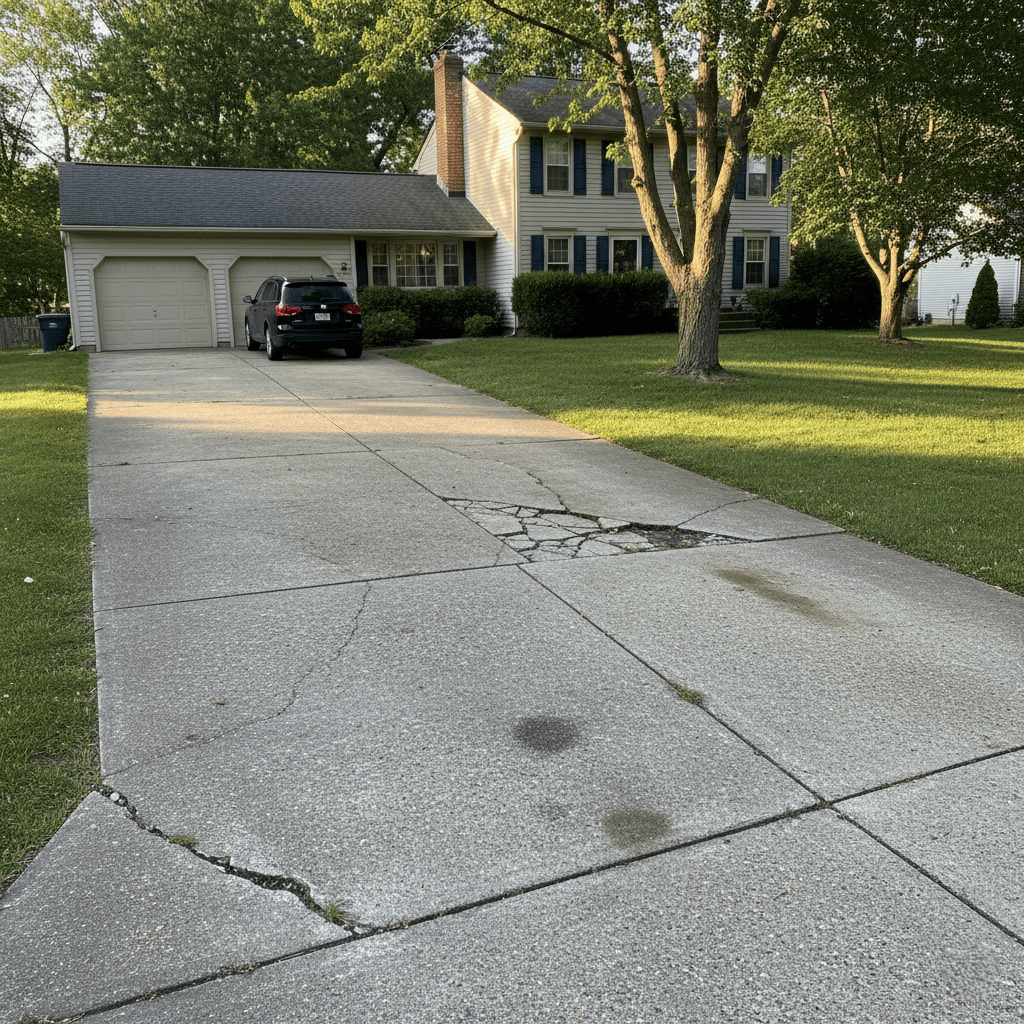
Repair Methods Vary Based on the Type of Damage and Cost
Concrete damages are categorized by type, and each has its own set of repair options; consequently, they vary greatly in terms of cost. Cosmetic damage (surface cracks) is generally the cheapest form of damage to repair, with typical costs ranging from $0.50 to $3 per linear foot, which makes it the best option for those who discover damage early on. Settling damage, caused primarily by seasonal ground shifts near Central Park, creates uneven surfaces, which require professional leveling services.
Damage resulting from spalling (the chipping away of surface layers), however, presents a more difficult challenge to repair and requires either partial replacement or resurfacing. Repairing a damaged foundation will depend on the extent of the damage and the structure impacted by the damage, with repair costs ranging from $350 to $20,000. Driveway potholes create hazardous situations, and repairing them costs approximately $100 to $400 per hole.
Cosmetic Damage Compared to Structural Issues
The difference between cosmetic damage and structural damage, in terms of both difficulty and expense, aissubstantial. Most surface cosmetic damage can be repaired with a sealant or a patching compound, or with some form of surface treatment, and these forms of repairs are much cheaper than repairing structural damage. Some examples of cosmetic damage include: cosmetic cracks, discoloration, and minor scaling. On the other hand, structural damage includes: foundation settlement, large-scale cracking patterns, or the failure of a load-bearing surface. Professional evaluations can assist in determining whether an issue is cosmetic or structural, thereby assisting the homeowner in determining the correct method of repair.
A good deal of homes in the Union College area suffer from frost-heave damage as a result of our climate, which creates structural challenges that will require professional intervention rather than self-service.
Size and Extent of the Project
The size and extent of a project will directly correlate with the costs associated with concrete repair because larger areas will require more materials, more labor time, and more equipment to complete. Single-crack repairs will represent a very low investment compared to a driveway resurfacing project, which can range from $3 to $5 per square foot. When damage exceeds 30 percent of the surface area, a complete replacement of the damaged concrete will become necessary.
Accessibility Factors Impact Pricing
Accessibility factors also play a role in pricing, especially for those properties located near the Mohawk River, where equipment accessibility may be limited. Contractors typically set up a minimum service charge between $300 and $2,000; therefore, small repairs will be priced on a per-square-foot basis, relatively high. Combining several small repairs into one service call, however, will provide better value than completing repairs separately.
Materials Used and Their Quality
The quality of the materials selected will significantly impact both the initial costs and the durability of the concrete repairs. Low-cost standard mixes used for basic repairs will be less durable and less resistant to extreme weather conditions than the specialized compounds used for extreme weather conditions. High-quality materials will perform better in the freeze-thaw cycles of our Schenectady winters and will reduce the likelihood of having to make repeat repairs.
Properties in historic districts such as the Stockade District may be required to use specific material specifications to preserve the aesthetic appeal of the area and to meet the requirements of local ordinances.
Building Department Permits and Local Codes
In many cases, permits are required for most concrete repair and replacement projects in Schenectady, with the requirements for obtaining a permit being outlined in the local building codes. Applications for building permits take a minimum of 24 hours to process, and nearly every alteration or construction project will require proper permitting. The contractor must provide detailed documentation of the scope of the work, specifications of the materials to be used, and estimated costs in order to apply.
Performing work without the proper permits exposes homeowners to the possibility of citations, fines, and stop-work orders that will ultimately increase the overall cost of the project. Licensed contractors will obtain the necessary permits and ensure compliance with local codes and regulations, thereby protecting the homeowner from potential legal and financial liabilities. The City of Schenectady’s building department will guide the repair project and inform the resident of what is required before starting the work.
Licensing and Insurance Requirements for Professionals
All concrete contractors in New York State are required to be properly licensed, bonded, and insured for liability and workers’ compensation. Protecting oneself from poor craftsmanship, future expensive repairs, and code violations that may negatively impact the value of your property, hiring licensed professionals is essential. Reputable contractors will offer lengthy transferable warranties, typically a decade, or will offer a warranty for the life of the product.
The City of Schenectady’s building department will verify the credentials of the contractor you choose to hire to ensure compliance with local regulations. Those homeowners living in areas designated as historic districts, such as near Proctor’s Theater, may be subject to special zoning restrictions and/or unique designation requirements.
Weather Conditions and Seasonal Timing
Timely completion of concrete repairs will impact both the quality of the repair and the cost of the repair. Spring is ideal for conducting assessments of damage created by winter’s freeze-thaw cycles, and ideally allows for favorable curing temperatures. Contractors will offer competitive pricing for repairs completed during the slower periods of the year, typically the fall and early winter.
Repairs made during adverse weather conditions will require specialized equipment and techniques, and will, therefore, incur a premium price. It is advantageous to plan for non-emergency repairs during favorable weather conditions to save money while producing better long-term results. Extreme heat in the summer can cause difficulties in the curing process of the concrete, and will require extra measures to be taken, which will increase the labor cost.
Labor Costs and Choosing a Contractor
Labor accounts for the majority of the cost of a concrete repair job, and the cost will depend on the complexity of the job and the level of experience of the contractor. While skilled contractors will charge a premium price, they will produce better quality results that will minimize the need for repeat repairs. Labor costs in the Capital District region will also impact the overall price of the project, with contractors charging more for their services based on their level of experience.
Obtaining multiple bids from different contractors will allow the homeowner to establish a fair price in the marketplace, while also discovering significant differences in the way they will address the problem and the quality of their work. Contractors working in the vicinity of the Schenectady Municipal Golf Course have considerable experience in working with difficult soils and drainage issues common to this region.
Equipment Needed for Specialized Work
The type and amount of equipment needed to complete a concrete repair job will directly impact the cost of the repair. Larger jobs will require heavy equipment such as concrete mixers, cutting tools, leveling equipment, and finishing tools, which will require a significant investment by the contractor. More complicated repairs may require the contractor to rent specialized equipment, which will add to the total cost of the job.
Limited access to properties will require the contractor to mix the concrete by hand or use smaller equipment, which will increase the labor time and costs. The contractor will have to develop creative solutions to complete repairs on properties with limited driveway access or landscaping obstacles, which will affect the final price of the job.
Other Factors That Affect Repair Costs
There are a number of secondary factors that will influence concrete repair costs beyond the basic cost of materials and labor. Removing the damaged concrete will add to the cost, which can range from $1 to $6 per square foot, depending on how easily accessible the damaged area is and the cost of disposing of the damaged concrete in your area. Additional site preparation requirements, such as excavation and installing new base material, will also add to the cost.
Property owners in Schenectady may have underground utilities that will require professional location services prior to commencing excavation work. Property owners with decorative finishes, color matching, or special textures on their concrete will pay more for the repair, but the finished product will be aesthetically pleasing and add to the value of their property.
Creating Successful Concrete Repair Projects
Successful concrete repair projects start with a thorough professional assessment and an awareness of all the costs involved in the project. When considering whether to repair or replace concrete, comparing the cost of repair to the cost of replacing the concrete will assist in determining the most economical long-term solution. Recurring problems in a property may be best resolved by completely replacing the damaged concrete, rather than continuing to repair the damaged section.
Maintenance and Early Detection of Damage Will Save Money
Regular maintenance and prompt response to minor issues will save property owners money by preventing costly major repairs in the future. Budgeting for regular maintenance of your concrete, just as you would for your roof or HVAC system, is essential.
Quality repairs done correctly will extend the life of your concrete significantly and provide an excellent return on investment.
At Schenectady Concrete Works, we recognize the unique challenges faced by local homeowners and provide a wide array of concrete repair solutions that are specifically tailored to our regional climate and soil conditions. Our experienced staff will provide quality workmanship, and assist our clients in navigating the requirements for permits and selecting materials for the best possible outcome.