Menu
Schenectady Commercial Concrete Flatwork: Standards & Codes
Commercial Concrete Schenectady
To be successful, all commercial concrete projects in Schenectady must comply with a multitude of regulations from local government, the state of New York, and various trade organizations, such as the American Society of Civil Engineers (ASCE), the National Ready Mixed Concrete Association (NRMCA), and the American Concrete Institute (ACI). In addition to being safe for the general public, commercial concrete projects need to meet requirements for structural integrity. When an owner/developer or contractor understands the requirements, it will help them develop their sidewalk, parking lot, load dock, and other flat work applications in accordance with the regulatory requirements. The New York State Building Code, which is the standard by which all commercial buildings are regulated, along with many of Schenectady’s local ordinances, has established minimums for concrete thickness, reinforcement, finishing, and quality control processes. In addition to meeting minimums, ACI provides professional designers and builders with technical guidelines that promote good design and construction practices beyond what is required by code. Meeting these requirements will protect your investment and ensure that you achieve long-term performance and compliance with the law.
Building Code Requirements in Schenectady
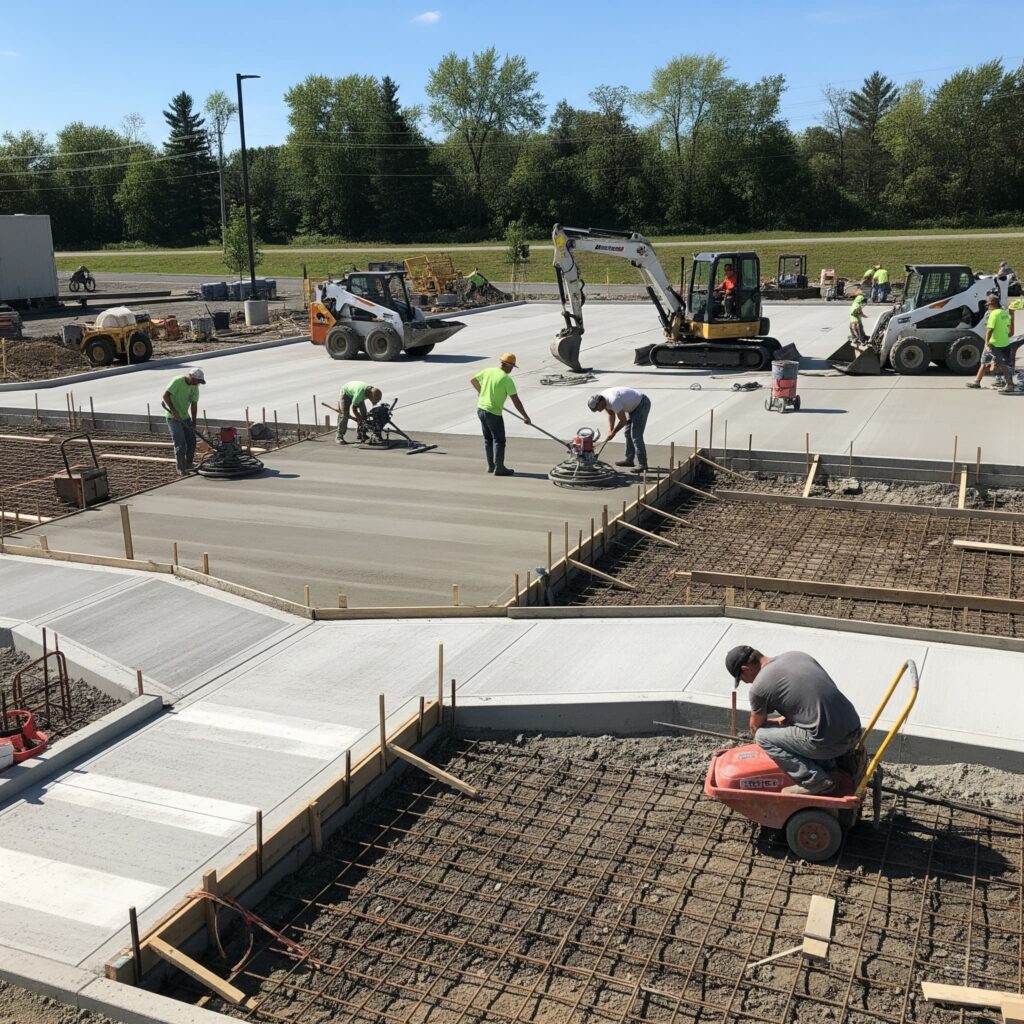
The City of Schenectady has a Building Department that is responsible for enforcing the New York State Building Code for commercial concrete flatwork, and the majority of construction projects require a permit. The New York State Building Code (Chapter 19) establishes requirements for the use of concrete for all commercial applications. The Code establishes requirements for design, construction, and materials used in the construction of commercial concrete flatwork, including the type of concrete mix used, the thickness of the slab, the reinforcing steel used, and how the slab will be finished.
All permit applications for commercial concrete flatwork projects must include detailed specifications for the concrete strength, thickness, reinforcing steel, and finishing procedures. In addition to reviewing these specifications, building officials also review the plans to ensure they comply with the structural requirements, accessibility standards, and environmental considerations for the project. Inspectors conduct inspections of the project at various stages, including prior to placing the subgrade material, after installing the reinforcing steel, during the placement of the concrete, and after the final surface finish has been completed to verify that the project complies with the code.
Structural Concrete Flatwork Requirements
All structural concrete flatwork constructed in accordance with the New York State Building Code must comply with ACI 318; however, the New York State Building Code modifies ACI 318 requirements to reflect local conditions such as freeze-thaw conditions. Minimum compressive strengths for commercial concrete flatwork are dependent upon the application. Sidewalks are typically designed to have a minimum compressive strength of 3000 psi, while parking lots and other high-traffic areas are typically designed to have a minimum compressive strength of 4000 psi or higher based upon the load conditions. Reinforcing steel is installed in accordance with ACI standards for bar placement, cover requirements, and splice details.
Additional requirements are included in the Building Code to enhance the durability of the concrete under freeze-thaw conditions by specifying maximum water-cement ratios for Schenectady’s climate and requiring air entrainment in the concrete to enhance its durability. Areas near Union College and downtown Schenectady must also take into account historical district requirements, which may limit the types of materials, colors, and construction methods used while still complying with the Building Code.
Commercial Concrete Flatwork Design Requirements
Parking lot design must comply with ACI 330, which addresses thickness determination, joint spacing, and reinforcement requirements based upon the anticipated loading conditions. Facilities that serve delivery vehicles must be designed differently from those that serve passenger vehicles due to the increased loads associated with delivery vehicles. Soil bearing capacity, wheel loads, and repetition factors for anticipated traffic must be considered when determining the thickness of the slab.
Control joints, isolation joints, and construction joints must be properly detailed and spaced to prevent random cracking and to allow for expansion and contraction of the concrete. ACI recommends a maximum spacing of 12 to 15 feet for unreinforced flatwork; however, this spacing may need to be adjusted based on the environmental conditions and properties of the concrete. Proper sealing of the joints prevents water from infiltrating the joint and maintains the structural integrity of the flatwork throughout its service life.
Thickness and Loading Requirements for Commercial Flatwork
The thickness of commercial concrete flatwork must be determined based on the subgrade conditions, anticipated loads, and desired performance of the flatwork. A minimum thickness of six (6) inches is typical for standard parking lots, while loading docks and areas where large trucks circulate may require eight (8) to twelve (12) inches of thickness, based upon the wheel loads and frequency of use of the area. Due to the diverse types of vehicular traffic that travel through the downtown business district of Schenectady, many of the commercial properties located in this area must accommodate both passenger vehicles and delivery trucks, and, therefore, must be designed using composite design techniques.
Reinforcement Placement Tolerances
Placement of the reinforcement must comply with the ACI 117 tolerance requirements to ensure proper structural performance and durability of the flatwork. The inclusion of temperature and shrinkage reinforcement helps to control cracking and distribute loads evenly across the slab areas. The amount of concrete cover provided to the reinforcement must be sufficient to protect it from corrosion while also maintaining the fire-resistance requirements of the flatwork.
Accessibility Requirements for Commercial Flatwork
Commercial flatwork, including sidewalks, parking lots, and pedestrian paths, must comply with Americans with Disabilities Act (ADA) requirements. The minimum sidewalk width for most applications is thirty-six (36) inches, while wider sidewalks are required at turns and intersections. The cross-slope limitations of the flatwork must not exceed two percent (2%) to ensure safe passage for users of mobility devices.
The specifications for curb ramps must include a slope not exceeding one-to-twelve (1:12), or 8.33%, and must be equipped with detectable warning surfaces at transitions to roadways. Commercial properties must provide accessible parking spaces that meet the size and signage requirements, and must be connected to the building entrance by an accessible route. Commercial properties in the GE Realty Plot and other established neighborhoods must integrate their ADA-compliant features with their existing infrastructure and architectural features.
Slip Resistance and Surface Texture Requirements
ADA requires the surfaces of commercial flatwork to be firm, stable, and slip-resistant for use by people using wheelchairs, crutches, walkers, and other mobility aids. The technique used to finish the concrete surface must provide enough traction to prevent slipping, but not so much texture as to impede the movement of wheel-based devices. Perpendicular broom finishes are typically acceptable for slip-resistance, while also providing a relatively smooth surface for use by wheel-based devices.
To eliminate trip hazards, the allowable difference in level must not exceed one-quarter (1/4) inch at joints and cracks, with beveled transitions allowed up to one-half (1/2) inch maximum. To maintain ADA compliance and protect themselves from potential liability, property owners must develop regular maintenance programs for their commercial flatwork.
Testing and Inspection Requirements
ACI 301 specifies the quality control procedures for commercial concrete flatwork, including testing of materials, placement procedures, and acceptance criteria. Testing of the concrete must include strength testing of cylinders taken during the placement of the concrete and tested at specified intervals to confirm compliance with the design requirements. Slump testing is performed to ensure the workability of the concrete, while also ensuring that the water-cement ratio does not exceed the specified limits.
In addition to laboratory testing, field testing is conducted to verify that the air content of the concrete is within the acceptable range to resist freeze-thaw damage and to ensure that the proper curing temperatures are maintained to promote proper hydration of the cement. The variable climate of the Schenectady area necessitates special consideration of hot and cold weather concreting procedures to ensure that quality is maintained while accommodating the seasonal construction schedule. Testing services provided by certified professionals document compliance with the Building Code and provide warranty protection for the property owner.
Installation and Finishing Requirements
Proper subgrade preparation requires the compaction, drainage, and leveling of the subgrade to provide a suitable base for the concrete to perform satisfactorily throughout its service life. Vapor barriers may be required in some applications to prevent moisture migration and to protect floor coverings or sensitive equipment. Proper installation of the base course provides a uniform base for the concrete to rest on and facilitates drainage.
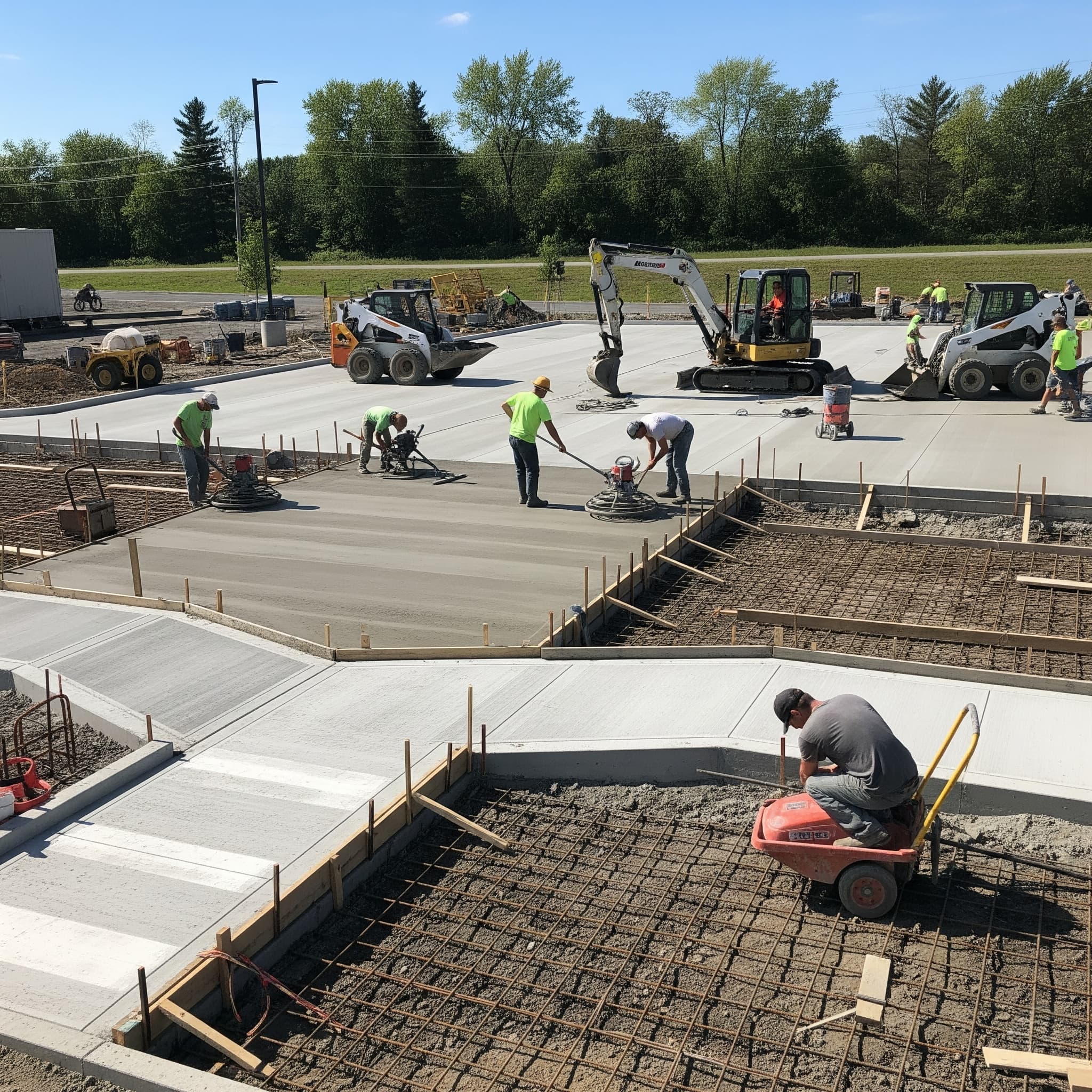
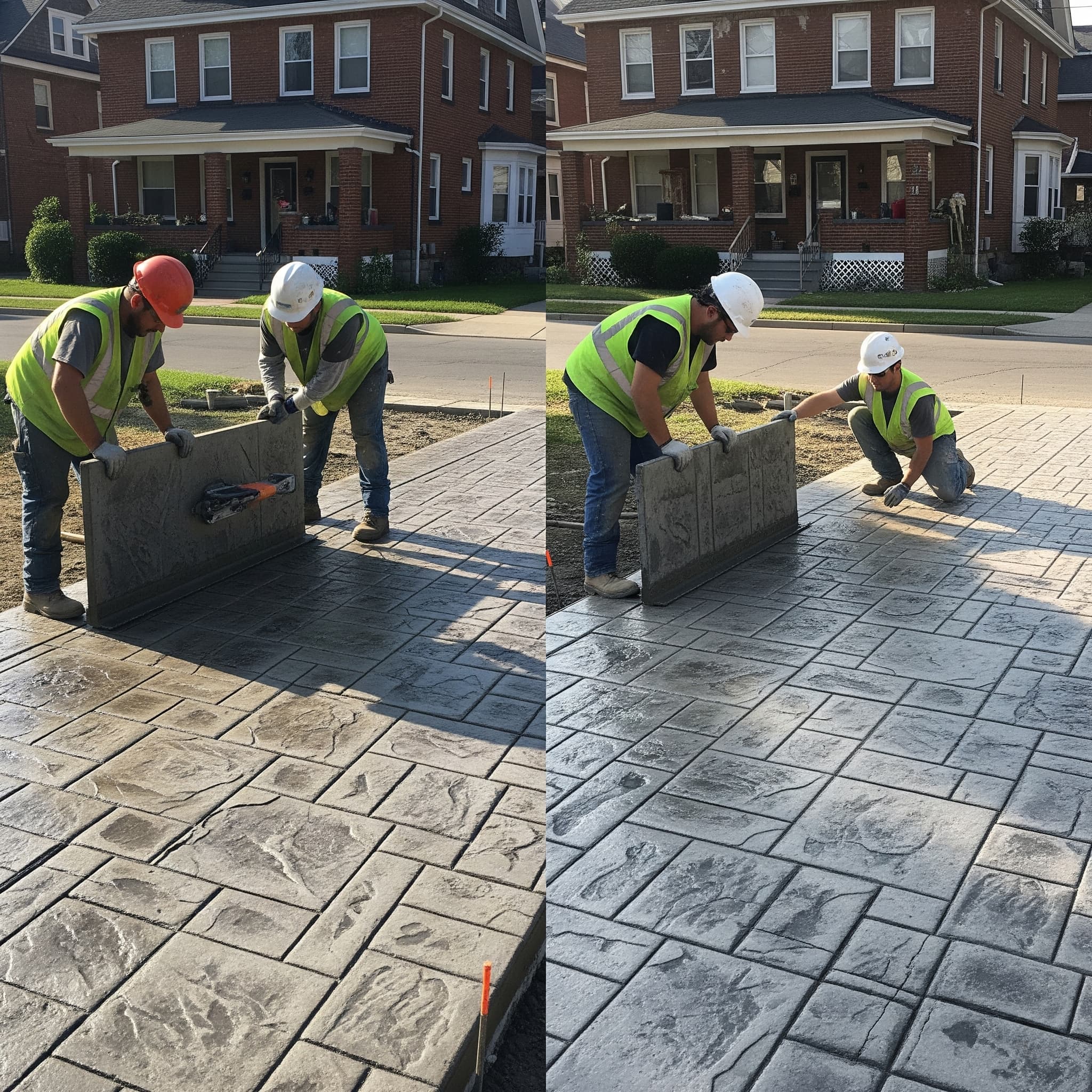
The finishing procedure must comply with the ACI standards for flatness and levelness tolerances, which are dependent upon the intended use of the flatwork. Commercial flatwork requires attention to detail regarding the preparation of the surface for finishing, the installation of joints, and the curing of the concrete to provide a durable and long-lasting product. Many commercial properties in the downtown area of Schenectady require decorative finishes such as colored concrete, stamped patterns, or exposed aggregate finishes.
Sustainability and Environmental Requirements
Increasingly, “green” building standards are influencing the design of commercial concrete flatwork through requirements for recycled content, permeable surfaces, and energy-efficient materials. LEED certification programs recognize the contributions of concrete to sustainable construction through its thermal mass, durability, and recyclability. In addition to the local requirements for stormwater management, local governments may require permeable concrete or other infiltration strategies to reduce the impact of stormwater runoff on the environment.
Material sourcing preferences of the project team should favor local suppliers and recycled aggregate products to reduce the impact of transportation on the environment and to support the regional economy. Commercial properties in the Stockade Historic District must balance their desire to incorporate sustainable features into their design with the preservation requirements of the District, which may limit the choice of materials or construction methods.
Requirements for Stormwater Runoff Control
Commercial developments must provide adequate control for stormwater runoff through proper grading of the site, installation of a stormwater collection system, and possibly through the use of permeable pavement. The New York State Department of Environmental Conservation (DEC) requires that stormwater pollution prevention plans be developed for larger commercial projects that could potentially pollute the Mohawk River watershed. As such, the design of the commercial concrete flatwork must be coordinated with the site-wide drainage system to prevent flooding and to protect adjacent properties.
Bioretention areas and green infrastructure must be integrated with hardscaping and landscape features to ensure that they operate effectively throughout the varying seasonal conditions found in the Capital Region.
Acceptance Criteria and Inspection Procedure
Building department inspectors will verify that the commercial concrete flatwork project complies with the approved plans and specifications at various stages of construction. Before the placement of the subgrade material, inspectors will verify that the subgrade has been prepared properly in terms of elevation, compaction, and base course installation. After the reinforcing steel has been installed, inspectors will verify that the steel has been placed correctly, spliced correctly, and that there is sufficient cover to meet the structural design requirements.
After the final surface finish has been completed, inspectors will evaluate the surface finish, joint installation, dimensionally accurate, and overall compliance with permit requirements. The acceptance criteria for commercial concrete flatwork will include compliance with the Building Code and performance of the flatwork based upon its intended use. Commercial property owners will not receive a certificate of occupancy until the building department inspector verifies compliance with all permit requirements.
Documentation and Record Requirements
Property owners must maintain permanent records of the commercial concrete flatwork project, including material test reports, inspection reports, and as-built drawings that demonstrate compliance with the Building Code and provide evidence of the performance of the flatwork. Maintaining these records will assist property owners in defending against liability claims related to non-compliance with ADA accessibility requirements, and will also provide them with recourse if there are defects or performance issues with the flatwork that arise during its service life.
The duration of the warranty for commercial concrete flatwork is typically one (1) year, and may be extended for structural elements or specialized systems. By hiring a licensed contractor to install the commercial concrete flatwork, property owners can obtain warranties for workmanship and materials, and can seek recourse if there are defects or performance issues that arise during the initial service period.
Local Building Code Amendments and Special Requirements
The City of Schenectady Municipal Codes address several local issues, including historic district requirements, landscaping standards, and commercial design guidelines. Commercial properties located in established neighborhoods must balance architectural compatibility with modern performance standards. Regulations for commercial properties in the downtown business district may specify materials, colors, or finishes to maintain the aesthetic consistency of the community.
Design and construction decisions for commercial concrete flatwork must also take into account snow and ice management requirements, including heating systems, surface textures, and drainage details to facilitate snow storage and ice control chemical usage and mechanical removal. Commercial properties must provide adequate space for snow storage, ice control chemical usage, and mechanical removal equipment that may negatively impact the performance of the flatwork.
Compliance and Liability Protection Through Professional Services
By working with experienced professionals, property owners can ensure that they are interpreting and applying the complex code requirements for commercial concrete flatwork appropriately, while reducing their risk of non-compliance. Licensed engineers can provide design services that address structural, environmental, and accessibility requirements specific to each project. Experienced contractors will understand the proper procedures for the installation of commercial concrete flatwork, as well as the quality control measures necessary to ensure compliance.
Insurance companies prefer construction that complies with industry standards and professional practices, thereby reducing liability risks. Documentation of proper design and installation of commercial concrete flatwork will protect property owners against potential liability claims, while enhancing the value of their property through demonstrated quality and compliance. By developing regular maintenance programs, property owners can ensure compliance with accessibility and building codes throughout the service life of the commercial concrete flatwork, while protecting their investment in the property.
At Schenectady Concrete Works, we understand the complexities of the building codes that regulate commercial concrete flatwork and provide guidance to our customers throughout the design and construction process. We have extensive knowledge of local building codes, ACI standards, and accessibility requirements, ensuring that our customers’ projects are fully compliant with all applicable regulations and provide superior performance and long-term value to our commercial customers in the greater Schenectady area.